Key Takeaways
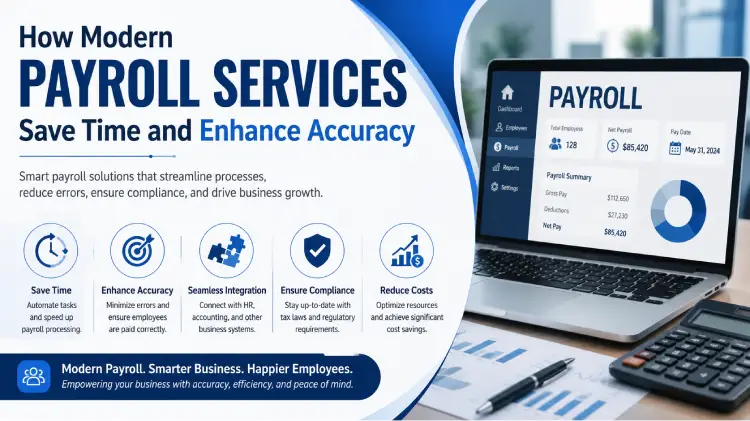
- Modern payroll services streamline administrative tasks, reducing processing time.
- Automation minimizes errors, ensuring employees are paid accurately and on time.
- Integration with other business systems enhances overall operational efficiency.
- Compliance with tax laws and regulations is simplified through up-to-date software.
- Outsourcing payroll can lead to significant cost savings and resource optimization.
Managing payroll is a critical yet complex task for businesses of all sizes. With increasing regulations and evolving workforce needs, businesses often face mounting pressure to streamline payroll and minimize costly errors. Today, modern payroll services have transformed the way organizations handle compensation, delivering substantial time savings and significantly improving accuracy for employers and employees alike. This article examines how these solutions are reshaping payroll administration and why they are indispensable in the contemporary workplace.
Payroll technology offers more than just faster paycheck distribution. By automating repetitive tasks, integrating with critical business systems, and ensuring compliance with the latest tax laws, these services allow businesses to operate more efficiently. They provide an edge that supports growth, employee satisfaction, and effective resource allocation, making payroll more than just a back-office necessity, but a strategic asset.
Streamlining Payroll Processing
Traditional payroll processes are slow, involving detailed calculations, document checks, and repetitive data entry, which often results in errors and delays in issuing paychecks. Modern payroll services automate wage calculations, benefits, and processing, cutting processing time by up to 50%. HR professionals and leaders save time, enabling them to focus on strategic initiatives rather than clerical tasks. This efficiency also improves employee morale by ensuring timely, accurate pay and by providing self-service portals for viewing pay stubs, updating information, and tracking leave. These features minimize HR interruptions, increase transparency, and foster trust. For seasonal or variable workloads, scalable payroll solutions offer essential flexibility to meet ongoing business needs.
Enhancing Accuracy Through Automation
Payroll errors can damage trust, lower morale, and lead to penalties. The American Payroll Association notes that manual data entry accounts for about 40% of these errors. Using automated services helps reduce this risk by directly retrieving data from time-tracking and attendance systems, while applying specific compensation rules and current local tax laws to each transaction. This setup decreases manual work, boosting accuracy and dependability.
In addition to improved accuracy, automated systems provide audit trails for tracking changes and quickly resolving issues. Access to historical data supports workforce planning and enables quick responses to employee questions or third-party audits. This level of precision and organization promotes consistency and trustworthiness across the organization.
Integrating with Business Systems
Payroll systems no longer operate in isolation. Modern services are designed to integrate seamlessly with accounting software, HR platforms, and workforce management tools. This connectivity ensures that data moves automatically and securely across various business applications. For example, when an employee is granted leave or has their pay status updated in the HR system, this information is reflected instantly in payroll, eliminating redundant entries and reducing the risk of inconsistencies. Integrated solutions support businesses in tracking labor costs, budgeting, and maintaining data compliance, leading to a more cohesive and productive work environment.
Integration enables consolidated reporting and analytics, allowing decision-makers to generate detailed insights about expenses, workforce trends, and compliance status with just a few clicks. These holistic views empower organizations to optimize labor strategies, enhance resource allocation, and respond dynamically to shifting business needs. As digital transformation continues across sectors, seamless integration is now a baseline expectation for efficient payroll management.
Ensuring Compliance with Tax Laws
Tax laws and employment regulations evolve frequently, posing a significant risk for businesses that attempt to keep up manually. Payroll service providers continually update their platforms to ensure calculations, filings, and documentation reflect the latest requirements at the federal, state, and local levels. This proactive compliance support reduces the administrative burden on organizations and helps prevent penalties arising from outdated processes or overlooked legal changes. Such peace of mind is especially valuable for companies operating across multiple geographic regions, where navigating tax codes can become increasingly complex.
Moreover, with electronic filing and automated deadline reminders, payroll systems help reduce the likelihood of late or incorrect submissions, decreasing a business’s exposure to compliance-related fines and helping maintain a good standing with tax authorities. As a result, leadership can confidently focus on growth without worrying about costly regulatory missteps.
Cost Savings and Resource Optimization
Outsourcing payroll opens the door to significant direct and indirect cost savings. Businesses eliminate the need for in-house payroll expertise, reduce compliance-related penalties, and prevent costly errors arising from manually managed systems. Furthermore, modern payroll providers offer scalable solutions that keep pace with organizational growth, ensuring resources remain optimized as the company’s workforce expands. These efficiency gains can translate into lower operating costs and a more agile, competitive business overall.
Organizations also benefit from predictable monthly expenses, as many payroll solutions are offered on a subscription basis, which further supports budgeting efforts. The opportunity to redeploy HR and administrative staff onto higher-value work, such as talent management and organizational development, can provide substantial returns. Over time, these benefits accumulate, leading to more robust business performance and greater strategic focus.
Real-World Examples of Success
Many businesses have seen advantages from modern payroll solutions. For example, a small hardware store reduced weekly processing time and avoided overtime errors by adopting time-tracking. A Brooklyn-based design agency saved hours and enhanced payroll accuracy through automation. Regional restaurant chains utilized cloud payroll to sync data across multiple locations, making report generation easier and reducing HR workload. Nonprofits and educational institutions also benefited from simplified reporting and decreased administrative tasks. These examples demonstrate that contemporary payroll services are adaptable and beneficial across different industries, emphasizing the advantages of investing in comprehensive payroll systems.
Conclusion
Incorporating modern payroll services enables companies to automate complex processes, ensure accuracy, and maintain compliance with ever-changing regulations. These services reduce processing times, integrate seamlessly with existing business systems, and minimize costly errors, all while freeing up resources for core business functions. As organizations adapt to a more digital and dynamic business landscape, adopting state-of-the-art payroll solutions is an essential step toward sustained success and competitive advantage.
Ultimately, the efficiency and accuracy gains provided by contemporary payroll services cannot be overstated. Companies that invest in these solutions are well-prepared to navigate the demands of modern employment with minimal friction and maximum peace of mind. Forward-thinking organizations recognize payroll modernization not only as an operational improvement but also as a strategic imperative for long-term business resilience and growth
